Knowing how to start investing with little money is one of the most financially valuable skills you can develop — and in 2026, the barriers to entry have effectively been eliminated. Zero-commission trading, fractional shares, and micro-investing apps mean anyone with $5, $20, or $100 can build a real investment portfolio today. The most powerful factor in investing isn’t the amount you start with. It’s when you start. Beginning to invest now with a small amount consistently outperforms waiting until you have a larger sum, thanks to the mathematics of compound growth.
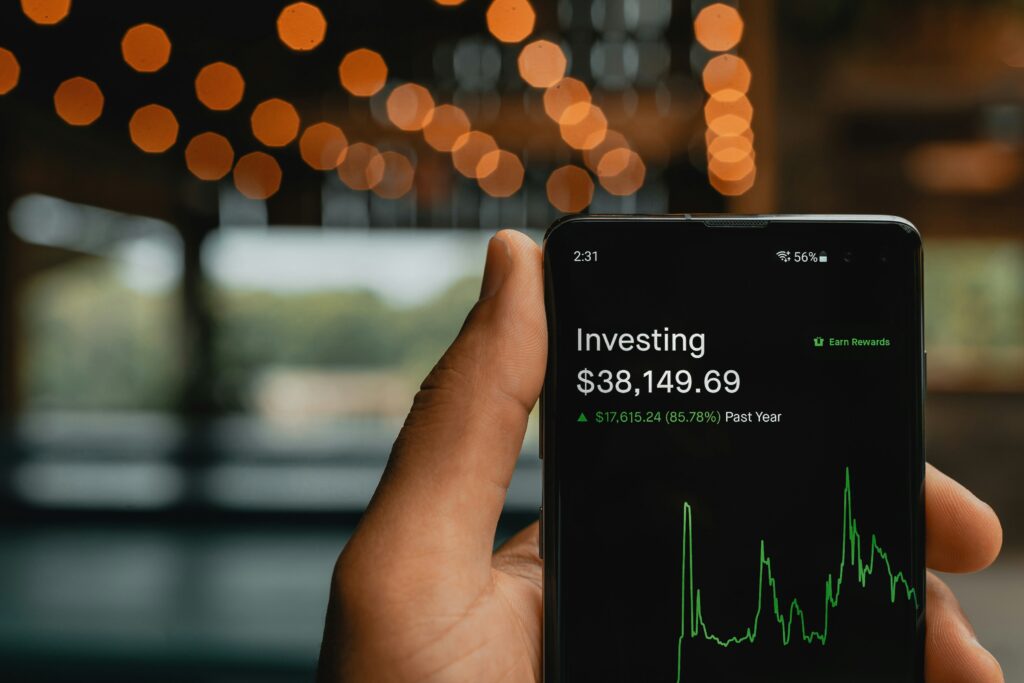
Why Starting to Invest With a Small Amount Is Smarter Than Waiting
Many people delay starting to invest because they believe the amount available isn’t meaningful enough to matter. This is one of the most consequential financial misconceptions. Consider this: $100 invested monthly beginning at age 25, growing at the historical average stock market return of approximately 10% annually, becomes roughly $637,000 by age 65. The same monthly investment starting at 35 becomes approximately $227,000. The $410,000 difference is entirely the result of starting ten years earlier — not putting in more money.
Learning how to start investing also builds financial habits and knowledge that compound alongside the returns. The investor who learns the landscape with $100 is better prepared to make smart decisions when managing $10,000 or $100,000.
Step One: Build a Small Emergency Fund Before You Invest
Before learning how to start investing, it’s worth noting what comes first: a small emergency buffer. Financial planners consistently recommend having at least $500 to $1,000 in an accessible savings account — ideally a high-yield savings account — before putting money into investment markets. Without this buffer, an unexpected expense forces you to liquidate investments potentially at the worst time. A high-yield savings account earning 4% or more APY is the right home for this money.
Choose the Right Account Type: Roth IRA for Most Beginners
For most people learning how to start investing with little money, the best first investment account is a Roth IRA. Contributions are made with after-tax dollars, but investments grow completely tax-free and qualified withdrawals in retirement are also tax-free. In 2026, the annual contribution limit is $7,000 (or $8,000 for those 50 and older). You can open a Roth IRA at Fidelity, Vanguard, or Charles Schwab with no minimum investment required — you can literally start with $1.
If your employer offers a 401(k) plan with a matching contribution, take advantage of the full match before opening a Roth IRA. An employer match is an immediate 50-100% return on your contribution — no investment in any market can match that guaranteed return.
What to Invest In: Start With a Broad Index Fund
For anyone learning how to start investing with a small amount, the single best first investment is a broad market index fund that tracks the S&P 500 or the total US stock market. These funds provide instant diversification across hundreds of companies, charge minimal fees (often 0.03-0.20% annually), and have historically outperformed the vast majority of actively managed funds over long time horizons. Fidelity’s ZERO funds have no minimum investment and no expense ratio at all — making them genuinely accessible to any beginner.
Set Up Automatic Investing and Forget the Market
The most powerful habit for new investors is automation. Set up a recurring monthly transfer — even $25 or $50 — from your checking account to your investment account and configure it to automatically purchase your chosen index fund. This removes emotional decision-making from the equation, eliminates the temptation to time the market (which even professional investors consistently fail to do successfully), and ensures you’re investing in both rising and falling markets through a technique called dollar-cost averaging.
Investment Apps Designed for Beginners in 2026
Several platforms make learning how to start investing straightforward. Fidelity and Schwab offer comprehensive investment accounts with no minimums and excellent educational resources. Acorns rounds up everyday purchases to the nearest dollar and invests the difference automatically — a genuinely painless way to start. Robinhood offers commission-free trading with a user-friendly interface, though its educational resources are more limited than established brokerages.
Common Mistakes to Avoid When Starting Out
The biggest mistake new investors make is selling during market downturns. Market volatility is normal — every major stock market index has experienced multiple significant declines and has historically recovered and continued to grow. Checking your portfolio daily adds anxiety without adding value. Setting up automatic investments and reviewing your portfolio quarterly is a more effective and less stressful approach. The second most common mistake is waiting for the ‘right moment’ to invest — there is no perfect moment, and time in the market consistently beats timing the market.